


 Botany lessons are often helpful for gardeners to understand some of the underlying reasons why plants behave the way they do—and why we do things a certain way.
When growing a plant that is expected to produce fruit, knowing something about the reproductive workings of the plant is in the gardener’s best interest and can prevent disappointment.
Flowers: More Than Just Pretty
Plants grown for their attractive flowers need only to bloom well to make us happy. We even deadhead blooming plants by removing faded flowers to prevent seed formation and encourage more flowers.
But flowers have another, very important purpose.
Flowers contain the sexual organs of plants, and plants produce them as part of their effort to reproduce.
When fruit or seed production is the goal, the sexual nature of flowers and their function become very important to the gardener.
The strategies plants have developed for blooming and pollination are incredibly varied, and gardeners need to understand any quirks associated with the plants they are trying to grow.
For plants that we grow for their attractive or edible fruit or seeds, how successfully they carry out their reproductive efforts directly affects whether we obtain the desired fruit or seeds.
What Exactly Is a Fruit?
In botany and horticulture, the term fruit basically indicates the structure a plant produces that encloses the seeds.
For example, all of these are technically fruits:
- Peppers
- Green beans
- Tomatoes
- Squash
- Peaches
- Holly berries
- Okra pods
- Apples
- Rose hips
- Acorns
Almost anything we refer to as a “seed pod” is the fruit of some type of plant.
For fruit to develop, the plant must successfully reproduce.
How Flowers Reproduce
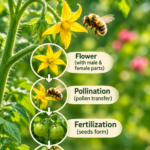
The parts that make up flowers can vary greatly from one type of plant to another. The basic plan includes male and female parts in the same flower, along with nonsexual parts such as petals.
The stamens, which are the male parts, produce pollen that carries the male germ cell, or sperm. The female part, called the pistil, holds the ovules, or eggs.
When pollen reaches the pistil of a suitable flower, pollination takes place.
If all goes well, the male germ cells then fertilize the eggs. The growing embryos form within seeds and stimulate the surrounding ovary to develop into the fruit.
(A few kinds of plants produce seedless fruit without fertilization.)
That sounds simple enough. What could possibly go wrong?
When the Weather Gets in the Way
For one, weather conditions can interfere.
Temperature extremes can cause the pollen of some plants to lose viability, preventing pollination. This is one reason tomatoes may produce little fruit in midsummer.
Fruit trees that bloom over a relatively short period of time, such as peaches, apples, and pears, can suffer loss of production if bad weather occurs while they are blooming.
And a late freeze during blooming can devastate a crop.
Some Fruit Trees Need a Partner
When growing fruit trees, you also must know which are self-pollinating and which are self-sterile.
Apples, pears, and plums are generally self-sterile, meaning that the pollen a plant produces will not effectively fertilize its own eggs.
For fruit to form, a different cultivar of the same kind of fruit tree must provide the pollen. This process, called cross-pollination, allows the pollen to reach the flowers.
Knowing this before planting can save a gardener from wondering why a perfectly healthy fruit tree isn’t producing fruit.
Male Flowers and Female Flowers
Certain types of plants produce some flowers that have only male parts (staminate flowers) and some that have only female parts (pistillate flowers).
For these plants, only the female flowers actually form the fruit.
Cucumbers are a good example.
I often hear from a distressed gardener concerned that most of the flowers are falling off without making cucumbers. Knowing that they are male flowers can relieve the stress.
The plant is not necessarily failing. It may simply be doing what cucumber plants naturally do.
So, some plants produce flowers with both male and female parts, while others produce separate male and female flowers on the same plant.
When Male and Female Plants Are Separate
Have plants taken the next step? Are there species that produce some plants with all male flowers and some with all female flowers?
The answer is yes.
Hollies, swamp red maples, papayas, and date palms are just a few of the plants that bloom this way.
These plants have adopted a sexual reproductive strategy almost universally used by animals: they have separate male and female members of the species.
Male and female plants of the same species may appear identical, with one great difference:
Only the females bear fruit.
Want Berries? Make Sure You Have a Female Plant
If you want a holly that will produce red berries, it has to be a female.
If you want a red maple that will produce that wonderful burgundy fruit in the spring, it has to be a female.
The only sure way to know you are getting a female is to choose a plant that already has fruit on it or select a named variety that breeders have established as a female clone, such as the ‘Savannah’ holly.
The More You Know, the Better You Grow
Whenever you grow a plant that you expect to produce fruit, the more you know about its reproductive habits, the more successful you are likely to be.
Understanding how a plant flowers, pollinates, and produces fruit can help explain many of the mysteries gardeners encounter—and can prevent a lot of unnecessary frustration when the flowers aren’t turning into the fruit we expected.